
Oddsfitness

Personal Fitness and Strength Trainer at Home in Delhi NCR
Categories
Fitness Nutrition

WHAT IS BETTER FOR MUSCLE GROWTH? HIGH REP TRAINING OR LOW REP TRAINING?

When it comes to achieving muscle growth via weightlifting, there is much debate over whether high repetition training or low repetition training is the most effective method. 

Understanding the differences between the two approaches can help inform which one may be best for an individual’s goals. 

High repetition training (HRT) is defined as a weightlifting approach which requires repetitions of 10 or more per set. 

This type of training places focus on muscular endurance, leading to an increase in the size and strength of slow-twitch muscle fibers. 

While HRT does not result in large amounts of strength gains, it can help build muscle mass and reduce fat more effectively than low repetition training. 

Low repetition training (LRT), on the other hand, is typically characterized by sets with 6 repetitions or less. 

This approach to weightlifting focuses on powerful, explosive movements that primarily target fast-twitch muscle fibers. 

LRT is the classic form of powerlifting and it offers greater increases in strength and muscle mass than HRT.

In order to decide which approach will be most beneficial for your personal fitness goals, it is important to consider various scientific evidence and studies. 

One study, published in the Journal of Strength and Conditioning Research in 2014, found that 10 weeks of either HRT or LRT resulted in similar levels of muscle size and strength gains. 

However, the participants who used HRT had a greater reduction in body fat when compared to those who used LRT. 

This suggests that HRT might be more beneficial for those looking to burn fat, while LRT could offer better results in terms of building muscle mass. 

Similarly, a 2017 study conducted by the American Council on Exercise found that 8 weeks of HRT was just as effective as the same period of LRT in terms of muscle size and strength gains. 

Notably, the participants in the HRT group also lost more fat than the LRT group, indicating that HRT is superior in terms of fat reduction. 

On the other hand, a 2016 study published in the European Journal of Applied Physiology concluded that, while 8 weeks of HRT improved muscular endurance, this was not the case for LRT. 

The researchers attributed this to the fact that the LRT group was performing more intense sets, with heavier weights. This could mean that, if a person’s primary goal is increasing their strength, LRT might be the better choice. 

So, why does HRT appear to be more effective for building muscle? One possibility is that by performing more repetitions, your muscles receive more “time under tension”. This means that they spend longer periods of time under strain, which can help to stimulate greater muscle growth over time. 

Furthermore, studies have shown that HRT can lead to greater stimulation of the muscles’ energy-producing systems than LRT. This can lead to improved endurance and greater muscle growth over time

Start your journey with the best trainers in Delhi 

Categories
Fitness Nutrition

IS SORENESS A GOOD INDICATOR OF MUSCLE GROWTH?


Soreness is a feeling of discomfort that is often associated with physical activity, such as lifting weights or engaging in other forms of exercise. 

While soreness can be an uncomfortable feeling, it is also often seen as an indicator of muscle growth. 

So, is soreness a good indicator of muscle growth? 

The answer to this question is both yes and no. 

On the one hand, soreness can be an indicator of muscle growth because when muscles are worked, small tears occur in the muscle fibers. 

As these muscle fibers heal, they become larger and stronger, resulting in muscle growth. 

So, when a person experiences soreness, this could indicate that their muscles have been successfully worked and that muscle growth has begun. 

On the other hand, however, soreness is not always an indication of muscle growth. In fact, if a person is overtraining, they may experience soreness without any corresponding increase in muscle size. 

This is because overtraining results in the body not having enough time to repair and grow muscle tissue between workouts, making it difficult for muscle growth to occur. 

Additionally, a person may experience soreness from working muscles that have already grown and are simply not used to being pushed beyond their current capabilities. 

In addition to not always being a surefire indicator of muscle growth, soreness can also be a sign of injury. 

When muscles are pushed too far or too hard, it can lead to micro-tears and trauma to the muscle fibers. 

While these micro-tears and traumas can eventually result in increased muscle size and strength, if the damage is too extreme, it can lead to injury, rather than muscle growth. 

This is why it is important for people to listen to their bodies and be aware of their limits in order to avoid injuries. 

Overall, while soreness can sometimes be a good indicator of muscle growth, it is not always the case. 

In order to assess if muscle growth is occurring, it is important to track one’s progress, such as through measuring body weight and circumference, or taking photos of oneself on a regular basis. 

Additionally, if a person is feeling unusually sore after a workout, it is important to take a break and give the body time to recover. 

In conclusion, while soreness can sometimes be a good indicator of muscle growth, it is not always the case. It is important to pay attention to one’s body and track progress

Start your journey with the best trainers in Delhi. 

Categories
Fitness Nutrition

OVERCOMING FAT LOSS PLATEAUS 

You’re exercising, you’re on the right nutrition programme and you’ve lost a bunch of weight over the last few months. 

But what do you do when the scale hasn’t moved for a very long time?

Your body goes in a survival mode. It does not really want you to lose weight—when you cut back on calories for too long 

Your body will then make you feel hungry because it thinks something is wrong and wants you to gain that weight back trying to preserve as much energy as possible 

Some other common reasons behind a weight-loss plateau may be gut imbalances, hormonal imbalances, immune dysregulation, inflammation, nutritional deficiencies, or under-recovery.

But don’t let this get you down! 

Here are some tips that may help you break through a weight-loss plateau. 

Make sure you’re really sticking to your diet. It’s easy to slip up here and there, but those small slips can add up and make a big difference in your weight-loss progress. 

If you find yourself slipping, take a step back and re-evaluate your diet to make sure it’s something you can really stick to long-term.

Crank up your exercise intensity. If you’re not seeing results from your current exercise routine, it may be time to increase the intensity. 

This doesn’t necessarily mean working out for longer periods of time, but rather working out more intensely. 

Adding more cardio or strength training to your routine can help you burn more calories and fat.

Change up your exercises. If you’ve been doing the same exercises for a while, your body may have adapted to them and they may no longer be as effective. 

Mixing up your routine can help you see results again.

Make sure you’re getting enough sleep. Sleep is important for overall health, but it can also impact your weight. 

Lack of sleep can lead to increased hunger and cravings, as well as decreased motivation to exercise. Try to aim for 7-8 hours of sleep per night.

Start your journey with the best trainers in Delhi 

Categories
Fitness Nutrition

TRAINING INTENSITY FOR MUSCLE HYPERTROPHY

Hypertrophy is the increase in muscle size due to the enlargement of the cells that make up the muscle tissue. 

To achieve this, you must subject your muscles to stress, which forces them to adapt and grow. 

The best way to do this is through resistance training, using weights that are heavy enough to challenge your muscles and force them to grow.

Training for muscle hypertrophy requires a well-designed workout routine that targets all of the major muscle groups. 

Each session should include a mix of compound exercises that work multiple muscle groups simultaneously, as well as isolation exercises that focus on a single muscle group. 

Sets should be kept relatively short, with rest periods of 30-60 seconds between sets.

The number of reps you perform per set will also play a role in determining the results you see. 

The amount of training intensity you need for muscle growth depends on a variety of factors, including your age, experience level, genetics, and recovery ability. 

If you’re new to lifting, you’ll likely need to start with lower intensities and gradually work your way up. 

Older lifters or those with more experience may be able to handle higher intensities from the start. 

And those with good genetics and recovery abilities may be able to get away with even more intensity.

But as a general rule, most people will need to train at an intensity of 60-80% of their 1RM (one-repetition max) to stimulate muscle growth. 

This means lifting weights that are heavy enough to fatigue your muscles within 6-12 reps. 

Training any lighter than this won’t be intense enough to trigger muscle growth, and training any heavier can actually lead to decreases in muscle size and strength.

So if you’re looking to build muscle, make sure you’re training with enough intensity. 

Lifting weights that are too light won’t do the trick, but lifting weights that are too heavy can actually be counterproductive. 

Find that sweet spot of intensity that allows you to stimulate muscle growth without overtraining or injuring yourself, and you’ll be on your way to making gains!

Parallel to this, make sure you’re eating enough calories to support muscle growth. 

A diet that’s high in protein and calories is essential for gaining size. Without adequate calories, your body will simply break down muscle tissue for energy, which will lead to reduced gains!

Start your journey with the best trainers in Delhi 
Categories
Fitness Nutrition

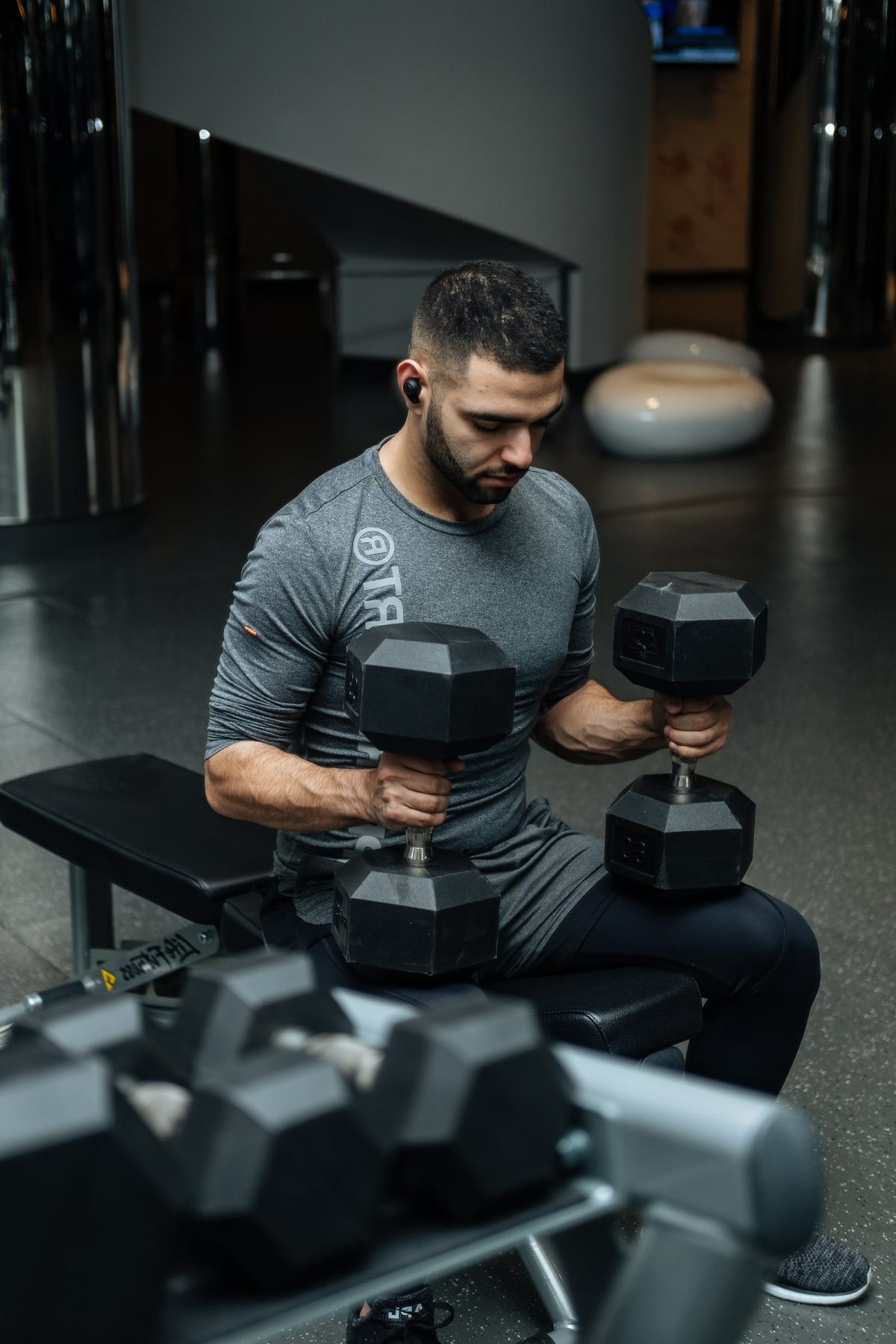
MYTHS ABOUT GAINING MUSCLE 

There are a lot of myths out there about how to gain muscle. 

Some people believe that you have to lift heavy weights to gain muscle, others believe that you need to drink whey protein and a lot of protein, and still others believe that you have to take steroids to gain muscle. 

The truth is, none of these things is necessary to gain muscle. You can gain muscle by lifting lighter weights and doing more repetitions, by eating a moderate amount of protein, and by taking advantage of your body’s natural ability to build muscle.

One of the biggest myths about gaining muscle is that you have to lift very heavy weights. 

Apart from the fact that you need to progressively overload while training, you can gain muscle by lifting lighter weights and doing more repetitions. 

This is because your muscles will adapt to the demands you place on them. If you always lift heavy weights, your muscles will become accustomed to this and will no longer grow. 

However, if you mix things up and lift lighter weights sometimes, your muscles will be forced to adapt and will grow.

Another myth about gaining muscle is that you need to eat a lot of protein. While protein is important for muscle growth, you don’t need to eat as much as you might think. 

A moderate amount of protein is all that’s necessary for muscle growth. Eat too much protein and your body will simply store it as fat if your caloric intake surpasses your maintenance calories 

Another myth is that you need to drink whey protein which will magically help you gain muscle.

The basics of muscle gain are to eat in a caloric surplus with the right amount of protein, carbs and fats for your body type.

Finally, some people believe that you need to take steroids to gain muscle. Steroids can help you gain muscle, but they come with a whole host of health risks as well

Just take advantage of your body’s natural ability to build muscle and you’ll see the result.

Start your journey with the best trainers in Delhi

Categories
Fitness Nutrition Uncategorized

KETOGENIC DIET FOR DIABETES? 

Did you know? 

Researchers initially developed and continue to recommend the keto diet for children with epilepsy.

It works by severely restricting carbohydrates, forcing the body to break down fats for energy, also called ketosis

It is a high-fat, moderate protein, and very low-carbohydrate diet that may help some people manage their blood sugar.

Type 2 diabetes is a condition that impacts blood sugar

For people with diabetes, insulin is either absent or does not work properly which reduces the ability of the body to use carbohydrates effectively, and in turn, causes sugar levels to be high in the blood.

It is found that the keto diet could help some people with type 2 diabetes because it allows the body to maintain blood sugar levels at a low but healthy level.

The diet’s lower intake of carbohydrates may help minimize large fluctuations in blood sugar, which could better impact several clinical markers of blood sugar control.

However since the keto diet involves a shift in typical eating habits and the body switching to a different energy source, it might lead to some adverse effects.

Following this diet, in the long run, can be very difficult because it is highly restrictive and not to mention the associated possible complications it may cause as well. 

When it comes to managing diabetes, there is no one right diet! The key is following a meal plan that meets personal preferences and needs and keeps clinical health targets, such as blood sugar levels or weight, in check.

It may be better for people with type 2 diabetes to focus on following a healthful, balanced diet with plenty of fresh fruits and vegetables, and spreading the intake of carbohydrates out evenly throughout the day instead. 

Start your journey with the best trainers in Delhi